
Published · 10 min read
Can You Remove an Old Tattoo Completely? Understanding Laser Tattoo Removal
Can you remove an old tattoo completely? Discover laser tattoo removal, costs, stubborn ink, cover-ups and treatment options at Belgrave Cosmetics, Bristol.
If you have a tattoo that no longer reflects your style, you might be wondering whether it's possible to remove it completely. The good news is that laser tattoo removal can significantly fade many tattoos, and some can become barely visible. However, complete removal cannot be guaranteed.
At Belgrave Cosmetics in Bristol, laser tattoo removal starts from £50 per session for a small tattoo, with prices ranging up to £150 for extra-large tattoos. We also offer semi-permanent makeup (SPMU) eyebrow removal for £99 per session. Your consultation and patch test are free.
Whether you want to remove an old design, fade a tattoo before a cover-up or explore options for unwanted eyebrow pigmentation, this guide explains what you need to know before getting started.
Can an old tattoo be removed completely?
One of the most common questions people ask about laser tattoo removal is whether their tattoo will disappear entirely.
The answer depends on several factors, including the ink colour, depth, density, age of the tattoo and how your body responds to treatment.
Laser tattoo removal works by breaking down tattoo pigment into smaller particles. Your body's immune system then gradually clears these particles over the following weeks.
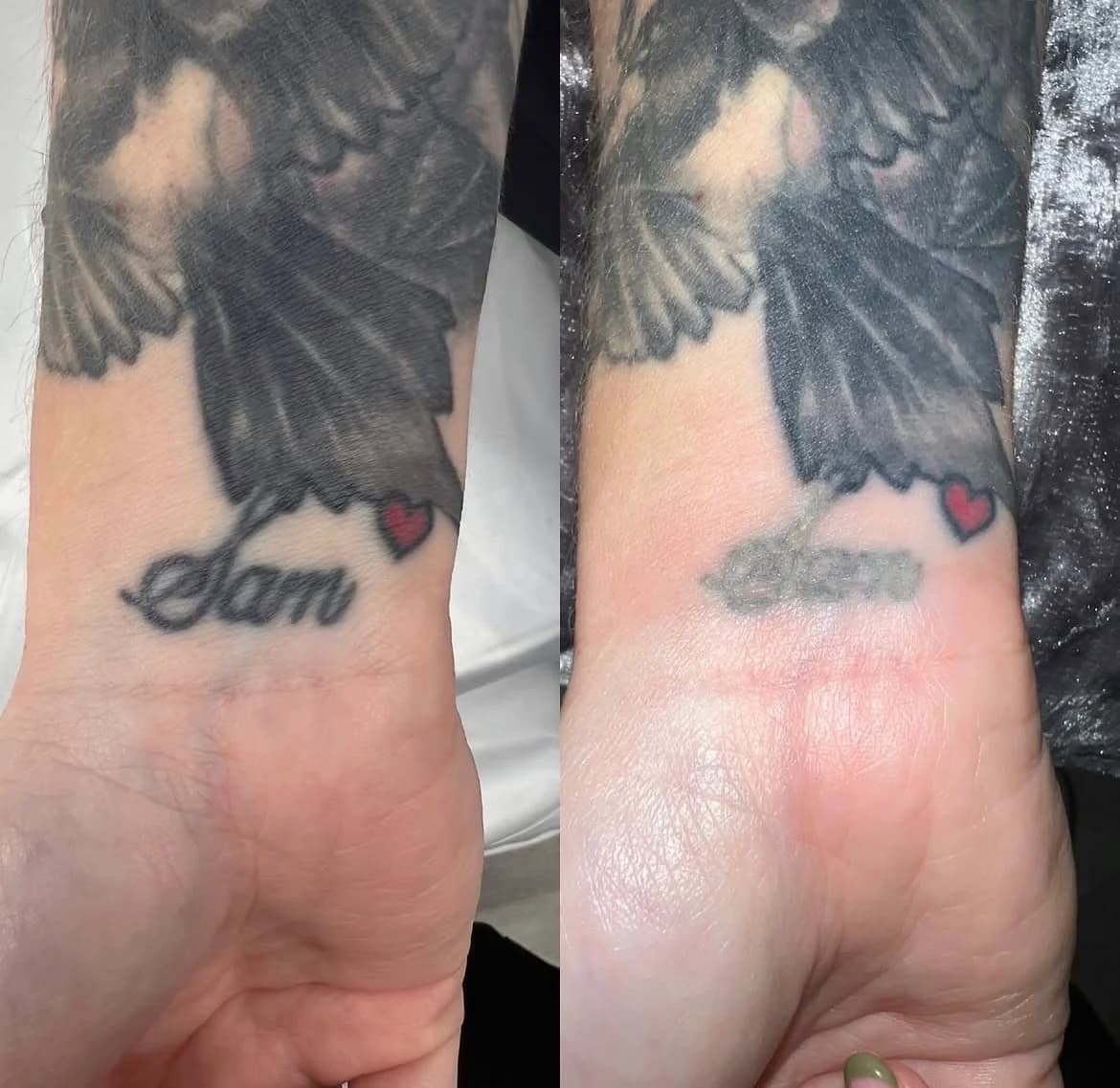
With repeated treatments, the tattoo can become progressively lighter. Some tattoos fade until they are barely noticeable, while others may leave behind traces of pigment or subtle changes in the skin.
Complete tattoo removal is not guaranteed, even if your tattoo is old or has already faded naturally.
During your free consultation at Belgrave Cosmetics, we'll assess your tattoo and explain what results may realistically be achievable.
How does laser tattoo removal work?
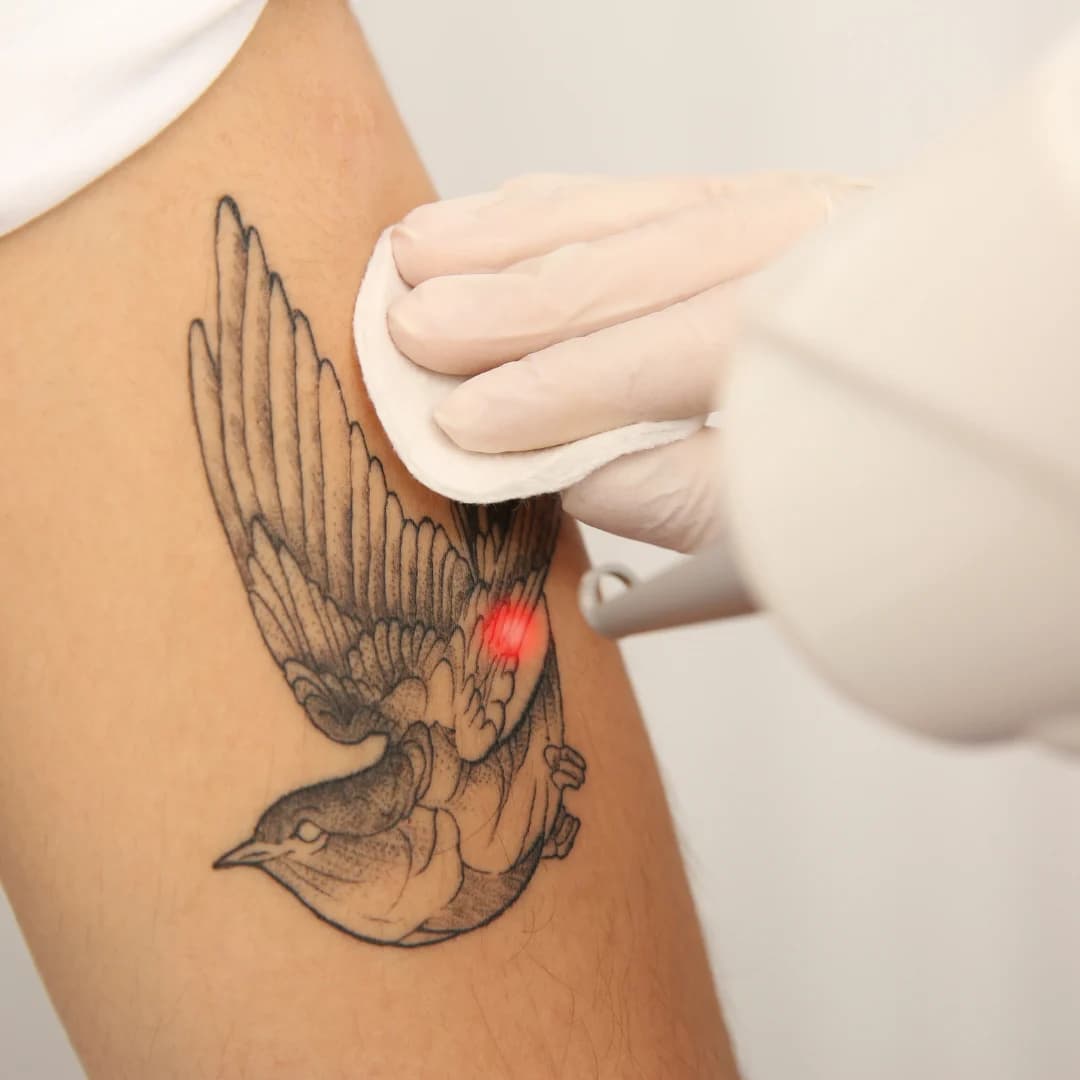
Laser tattoo removal uses short pulses of concentrated light to target ink particles beneath the skin.
The laser energy breaks the pigment into smaller fragments without cutting the skin. Your body's natural processes then gradually remove these fragments over time.
Because the body needs time to clear the ink, tattoo removal is a gradual process rather than a one-off treatment.
Most tattoos require several sessions, commonly around six to ten, with appointments usually spaced six to eight weeks apart. The number of sessions needed varies depending on the individual tattoo and your response to treatment.
At Belgrave Cosmetics, we begin with a free consultation and patch test. This allows us to assess your tattoo, discuss your goals and explain the treatment process before you proceed.
Does the age of your tattoo affect removal?
Yes, the age of your tattoo can influence how it responds to laser treatment, but older tattoos are not automatically easier to remove.
Over time, tattoos can fade naturally as your skin changes and your body gradually processes small amounts of pigment.
An older tattoo that has already faded may require a different treatment approach from a newer, densely pigmented design. However, the depth and type of ink also play important roles.
For example, an older tattoo with deep, stubborn pigment may still require multiple sessions, while a newer tattoo with lighter pigment may respond differently.
Other factors, including the tattoo's location, size and colour, must also be considered.
The best way to understand what may be possible for your tattoo is to have it assessed by a trained practitioner.
Which tattoo colours are hardest to remove?
Not all tattoo inks respond to laser treatment in the same way.
The colour of your tattoo is one of the most important factors when estimating how much fading may be possible.
Black and dark ink
Black and dark-coloured inks generally respond well to commonly used tattoo removal lasers because they absorb the laser energy effectively.
This can make black tattoos good candidates for laser removal, although the depth, density and composition of the ink still influence the outcome.
Blue and green ink
Some blue and green pigments can be more challenging to remove, depending on their composition and the laser wavelengths available.
These tattoos may require a more individualised approach, and complete removal may be more difficult to achieve.
Multicoloured tattoos
Tattoos containing several colours can be more complicated to treat because different pigments respond differently to laser energy.
A design with black outlines and coloured shading, for example, may fade unevenly as treatment progresses.
Your practitioner will assess the colours in your tattoo and discuss what to expect before treatment begins.
What makes some tattoos harder to remove?
Even when two tattoos look similar, their responses to laser treatment can be very different.
Here are some of the main factors that can influence your results.
1. Ink depth
Ink deposited deeper within the skin can be more challenging to clear than pigment closer to the surface.
2. Ink density
A heavily pigmented tattoo may require more treatments than a design containing less ink.
3. Tattoo colour
Some colours respond more readily to laser treatment than others.
4. Tattoo location
The body's ability to clear fragmented ink may vary depending on where the tattoo is located. Tattoos in areas with relatively limited circulation may respond more slowly.
5. Your skin's healing response
Everyone's body responds differently to treatment. Your individual healing process can influence the speed and extent of fading.
6. Previous treatments
If you've already had tattoo removal elsewhere, the remaining pigment and your skin's condition will influence the next steps.
These factors are why a personalised assessment is important. A practitioner can provide an estimate, but the final number of sessions cannot be predicted with complete certainty.
How much does laser tattoo removal cost in Bristol?
At Belgrave Cosmetics, our laser tattoo removal prices depend on the size of the area being treated.
Here's a breakdown of our current prices:
Treatment | Price per session |
|---|---|
Small tattoo removal | £50 |
Medium tattoo removal | £75 |
Large tattoo removal | £125 |
Extra-large tattoo removal | £150 |
SPMU eyebrow removal | £99 |
Consultation and patch test | Free |
The appropriate tattoo size category will be discussed during your consultation.
Most tattoos require multiple treatments, so your overall cost will depend on the number of sessions needed.
For example, a small tattoo priced at £50 per session would cost £300 over six sessions. This is an illustration rather than a quote, as your actual treatment plan may involve fewer or more sessions.
We can discuss your tattoo, your goals and the likely treatment requirements before you commit to a course.
Explore our laser tattoo removal treatment page for further information.
How many sessions will it take to remove an old tattoo?
Most tattoos need several sessions to achieve significant fading.
At Belgrave Cosmetics, many tattoos require approximately six to ten sessions, with treatments usually spaced six to eight weeks apart.
However, this is only a general guide. Some tattoos may respond more quickly, while others may require additional treatments.
Your treatment plan will depend on:
The age and size of your tattoo.
The colours and density of the ink.
How deeply the pigment sits within the skin.
The tattoo's location.
Your skin's response to previous treatments.
Whether your goal is complete removal or sufficient fading for a cover-up.
Allowing enough time between appointments is important because your skin needs to recover and your body needs time to clear the fragmented pigment.
Removing a tattoo can therefore take several months or longer.
During your free consultation, we'll assess your tattoo and give you an estimate of the sessions you may need.
Should you remove your tattoo completely or fade it for a cover-up?
If you no longer like your tattoo, complete removal isn't necessarily your only option.
Laser tattoo removal can also be used to lighten an existing design before a tattoo artist creates a new one over the same area.
This is known as fading for a cover-up.
When complete removal may be your goal
You may prefer to remove as much of the existing tattoo as possible if you no longer want the design or would like to leave the area without a visible tattoo.
The degree of fading achievable will depend on your individual tattoo, and some pigment may remain after treatment.
When fading for a cover-up may be enough
If you'd like a new tattoo in place of the old one, you may only need enough fading to give your tattoo artist more options.
Lightening a dark design can sometimes make it easier for an artist to incorporate a new image, introduce different colours or create a design that better suits your preferences.
The amount of fading required will depend on the new design and your tattoo artist's recommendations.
It's worth discussing your cover-up plans with your tattoo artist before starting laser treatment. They can explain how much fading may be needed and help you decide on your goal.
At Belgrave Cosmetics, we can assess the existing tattoo and discuss a suitable approach to treatment.
What happens during a laser tattoo removal appointment?
If you're considering laser tattoo removal for the first time, knowing what to expect can make the experience feel more straightforward.
Step 1: Free consultation
We'll look at your tattoo's size, colour and age and discuss your treatment goals.
We'll also review relevant medical history and assess whether treatment is appropriate for you.
Step 2: Patch test
A patch test is required at least seven days before your treatment appointment.
This allows your skin's response to be assessed before proceeding with a full treatment.
A new patch test is required for each different tattoo being treated.
Step 3: Laser treatment
During treatment, the practitioner uses short pulses of laser light to target the tattoo pigment.
Protective eyewear is required, and the length of the appointment depends on the size and complexity of the tattoo.
Step 4: Skin recovery
After treatment, the skin may be red, swollen or tender. Blistering can also occur.
You'll receive aftercare guidance to help you look after the treated area while it heals.
Step 5: Gradual fading
Over the following weeks, your body gradually clears the fragmented pigment.
Further sessions may be recommended once your skin has recovered sufficiently.
Does laser tattoo removal leave scars?
Laser tattoo removal carries a risk of scarring, although the risk varies from person to person.
Temporary redness, swelling and blistering can occur after treatment. Changes in skin pigmentation or texture are also possible.
The risk of complications may be increased if you pick at the treated area, disturb blisters or scabs, or expose healing skin to excessive sunlight.
Following your practitioner's aftercare instructions is therefore essential.
Keep the area clean, avoid picking at the skin and protect it from the sun while it heals. If you notice increasing pain, spreading redness or signs of infection, seek appropriate medical advice.
During your consultation, discuss any concerns about scarring or previous skin reactions so that your suitability can be assessed.
What should you do before and after laser tattoo removal?
Preparing properly and following aftercare advice can help support your skin's recovery.
Before treatment
Avoid tanning: Tell your practitioner about recent sun exposure and avoid treatment on sunburnt skin.
Discuss medications: Mention any medication or skincare products that could affect your skin's sensitivity or healing.
Share your medical history: Make your practitioner aware of relevant health conditions and previous skin reactions.
Attend your patch test: Your consultation and patch test must take place at least seven days before treatment.
Ask questions: Make sure you understand the expected results, potential risks and likely treatment schedule.
After treatment
Keep the area clean: Follow the cleaning and dressing instructions provided by your practitioner.
Don't pick at the skin: Allow blisters and scabs to heal naturally.
Avoid unnecessary sun exposure: Protect the treated area while it heals and follow your practitioner's advice on sun protection.
Follow activity guidance: Ask your practitioner when you can safely return to activities that may irritate the area.
Attend follow-up appointments appropriately: Allow sufficient time for recovery between sessions.
Your practitioner will provide advice tailored to your treatment and the condition of your skin.
Can you remove semi-permanent eyebrow tattoos?
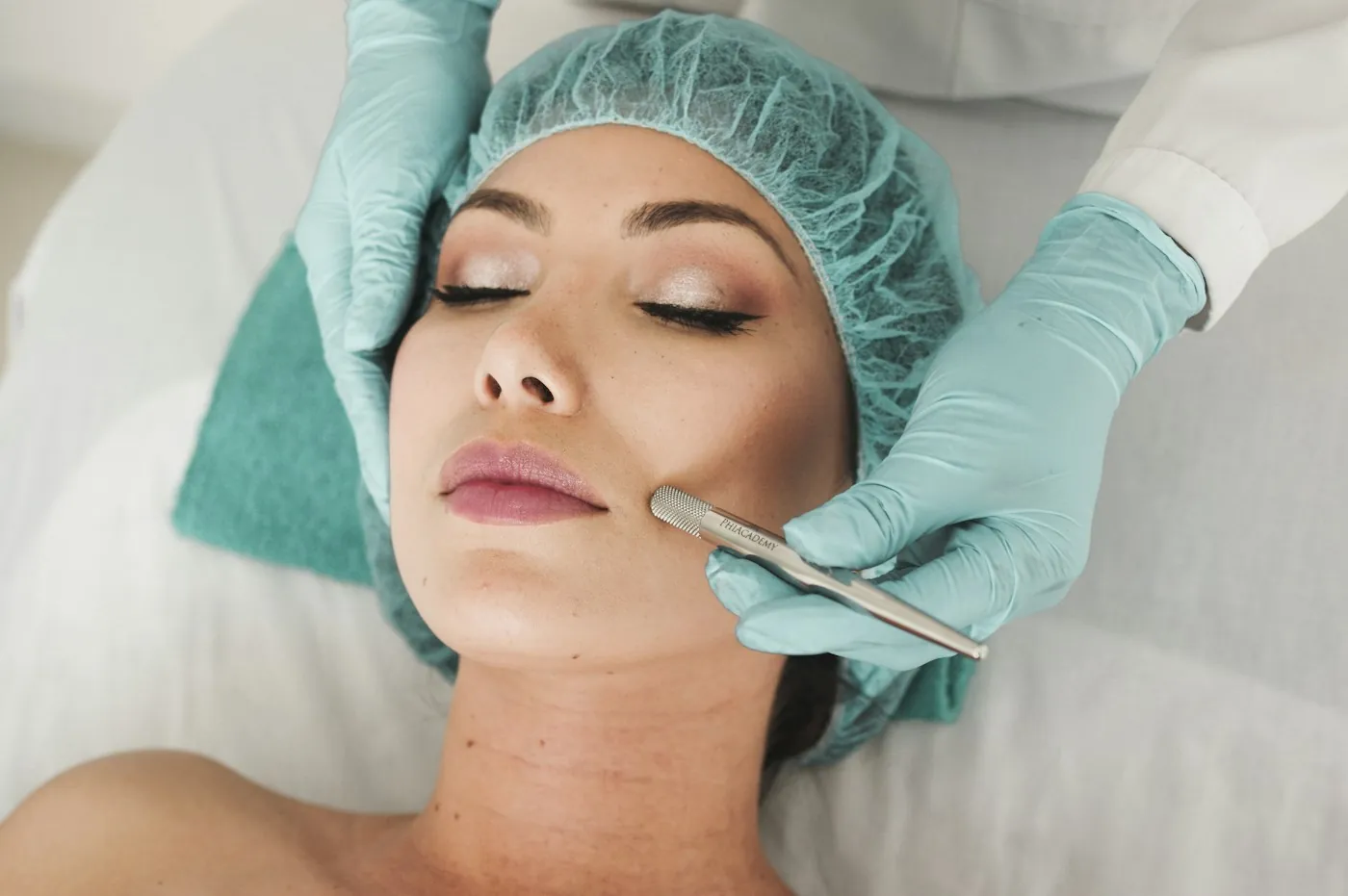
Yes, laser treatment can be used to fade or remove unwanted cosmetic tattoo pigment, including semi-permanent eyebrow makeup.
You might consider eyebrow tattoo removal if:
Your eyebrow shape no longer suits your preferences.
The pigment has changed colour over time.
You are unhappy with the original result.
You would like to lighten your brows before considering another cosmetic treatment.
At Belgrave Cosmetics, SPMU eyebrow removal costs £99 per session.
However, cosmetic pigments can behave differently from traditional tattoo inks. Some pigments may change colour or darken when exposed to laser energy, so careful assessment is particularly important.
Your practitioner will assess the pigment and discuss the potential risks and expected results before treatment.
A consultation and patch test are required before proceeding.
Is laser tattoo removal suitable for everyone?
Laser tattoo removal may be suitable for many people, but treatment isn't appropriate in every circumstance.
Your suitability depends on your skin, medical history, the tattoo itself and any factors that could increase the risk of complications.
Treatment may need to be postponed if you have sunburnt skin, an active skin infection or an area that has not healed properly. Pregnancy and breastfeeding are also reasons to postpone elective laser tattoo removal.
Some medications and medical conditions may affect your suitability, so it's important to discuss these during your consultation.
If you're unsure whether laser tattoo removal is right for you, speak to your practitioner before booking treatment.
Book your free tattoo removal consultation in Bristol
If you're ready to take the next step towards removing an old tattoo, Belgrave Cosmetics is here to help you explore your options. Whether you want to fade a design, prepare for a cover-up or discuss the possibility of more complete removal, we'll assess your tattoo and explain what may be achievable. Our laser tattoo removal prices start at £50 per session, and we also offer SPMU eyebrow removal for £99 per session.
Frequently asked questions
How many sessions are needed to remove an old tattoo?
Most tattoos require approximately 6–10 sessions, although some may need more. The number depends on the tattoo's size, age, colour and ink density.
Is laser tattoo removal painful?
You may experience a snapping sensation, similar to an elastic band flicking against your skin. Discomfort varies depending on the tattoo's location, size and your pain tolerance.
Which tattoo colours are easiest to remove?
Black and dark blue inks generally respond well to laser treatment. Lighter colours, particularly certain green, yellow and red pigments, can be more challenging to remove.
Can I remove a tattoo before getting a cover-up?
Absolutely! Laser tattoo removal can help fade an existing design, making it easier for a tattoo artist to create a new design over the area. Complete removal may not be necessary.
How much does laser tattoo removal cost in Bristol?
At Belgrave Cosmetics, prices start from £50 for small tattoos, £75 for medium, £125 for large and £150 for extra-large tattoos per session.
How long should I wait between tattoo removal sessions?
Sessions are commonly spaced around 6–8 weeks apart to allow your skin to recover and your body to gradually clear the fragmented ink.
Can laser treatment remove semi-permanent eyebrow tattoos?
Yes, Belgrave Cosmetics offers laser SPMU eyebrow removal for £99 per session. A consultation and patch test are required to assess the pigment and suitability before treatment.